For teachers
Big Fish can be used as a hands-on way to explore marine ecosystems, science and geography, sustainability, human–nature interactions and even arts or writing.
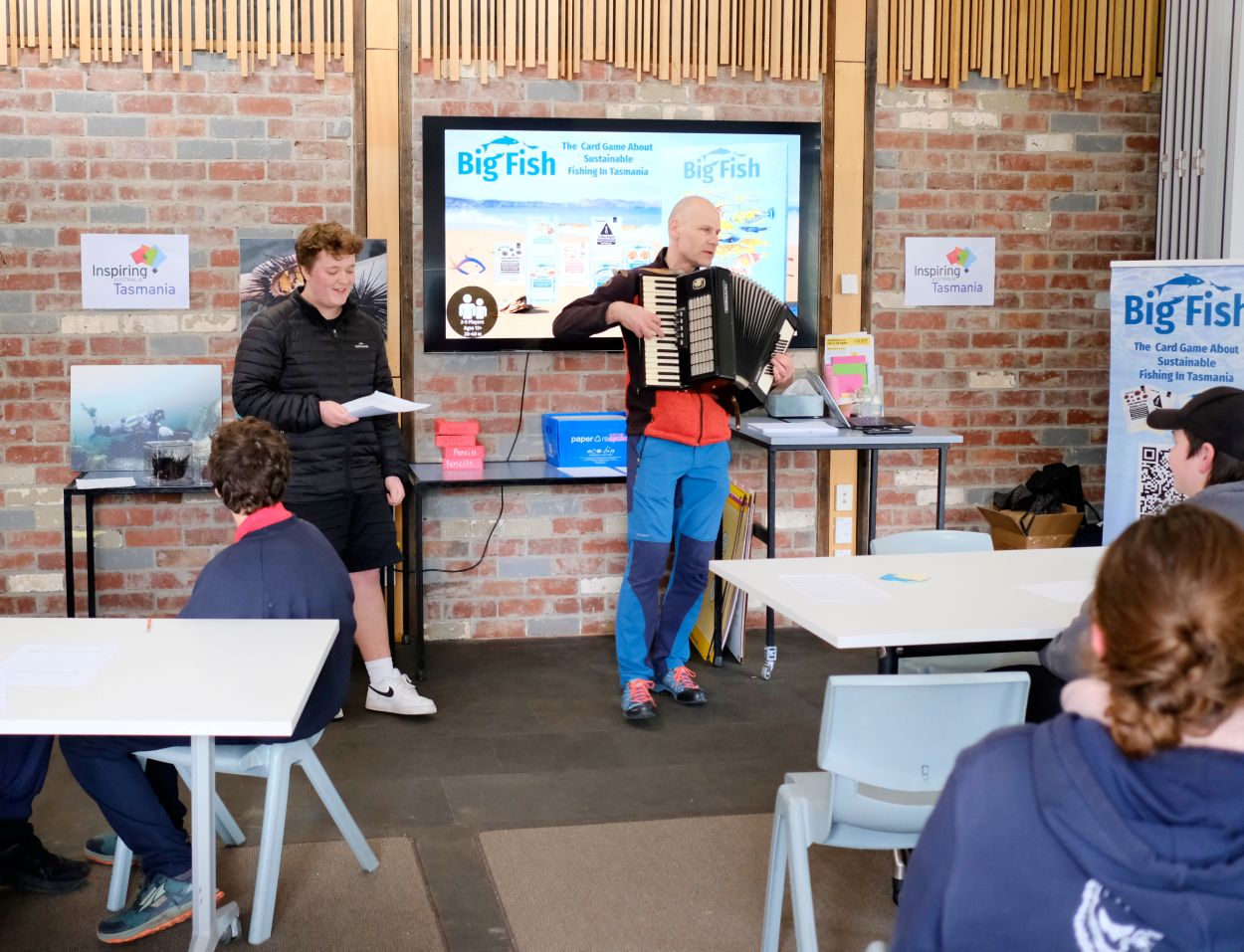
There are plenty of options to use the game in the lessons, and our experience shows that engaging with the real physical game makes the class experience more interactive and fun. The game is suitable for ages 12+ and we mostly recommend it for years 9-12. The Big Fish team is always happy to hear from teachers and keen to bring ocean wonders and big fish stories to the class. Please reach out if you would like to use the game in the class, need additional resources or would like to suggest your own ways of how the game could be used in teaching.
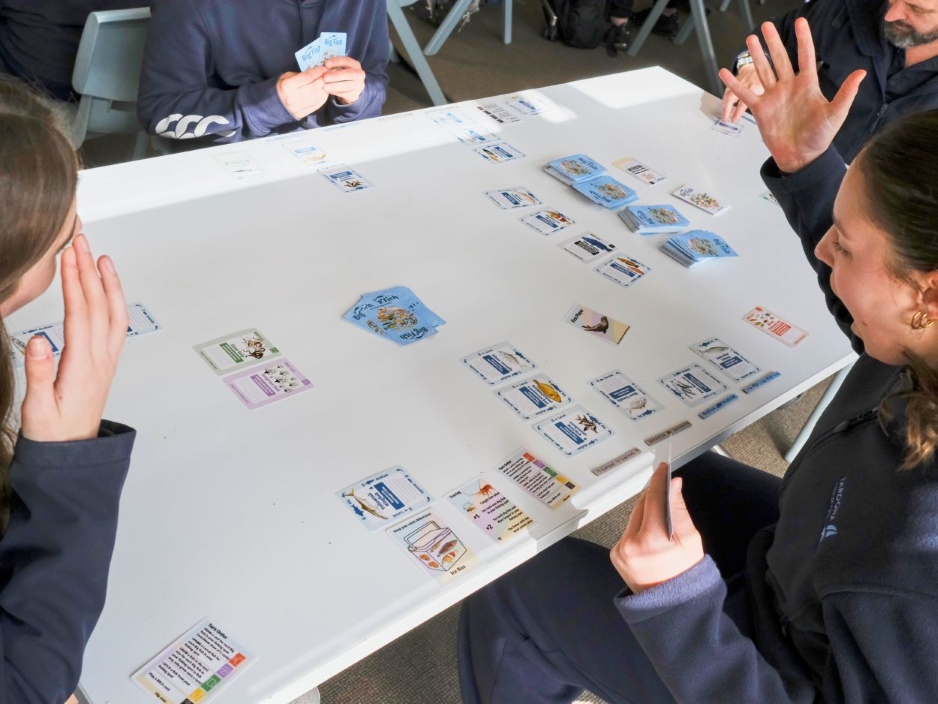
How to use Big Fish in class
Possible formats
- A 20–30 minute “mini-session” and discussion
- Full two-period lesson with a creative assessment (see three options below)
- A multi-lesson unit to explore multiple concepts
Practical tips
- Class size: works best for 5 to 20 students
- Time required: 30 minutes to two hours
- Materials needed: several game decks (contact us for a teacher pack) and printouts provided here
- Assessments: the game lends itself to creative and engaging assessments, like designing new cards or management options, creating presentations or diving deeper into marine science.
Testimonials
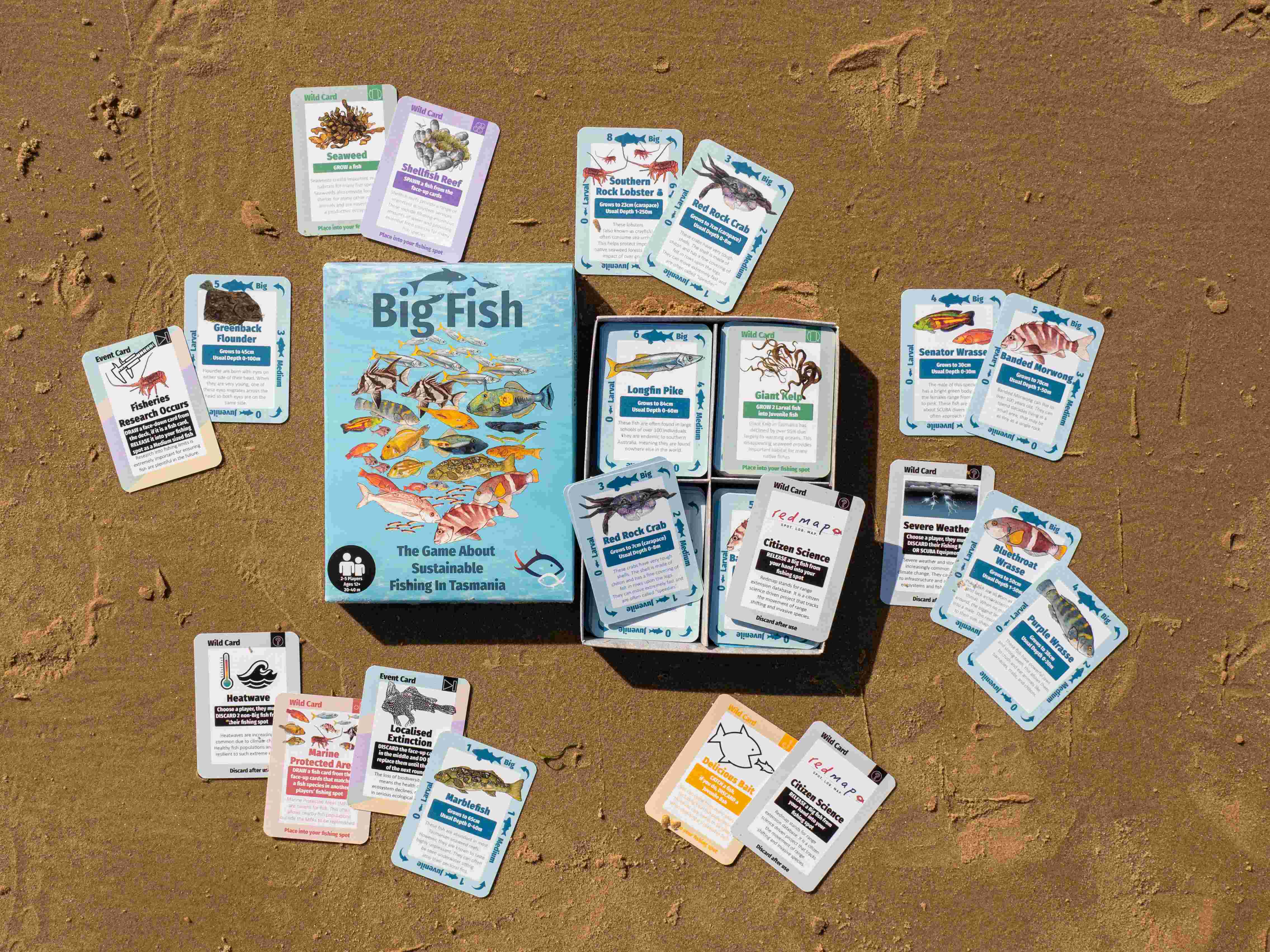
“Our marine biology students found the Big Fish game and its associated activities to be both engaging and highly educational. The beautiful artwork, featuring local Tasmanian fishes, immediately captured their attention and proved to be far more effective than a traditional fish ID book. The game provided a welcome respite from more formal study, while still aligning perfectly with the curriculum. The scenarios presented on the event cards were particularly valuable, serving as fantastic conversation starters and a natural way to launch into deeper learning. Once the students became confident with the rules, the game transformed into an eye-opening experience. They quickly grasped the ecological importance of big fish within marine ecosystems, and the gameplay reinforced this concept in a way that was both memorable and enjoyable. Overall, the Big Fish game proved to be an excellent teaching tool that blended fun, art, and science seamlessly – truly STEAM”
— Jan Seiler, science teacher from Hobart College
Lesson plans
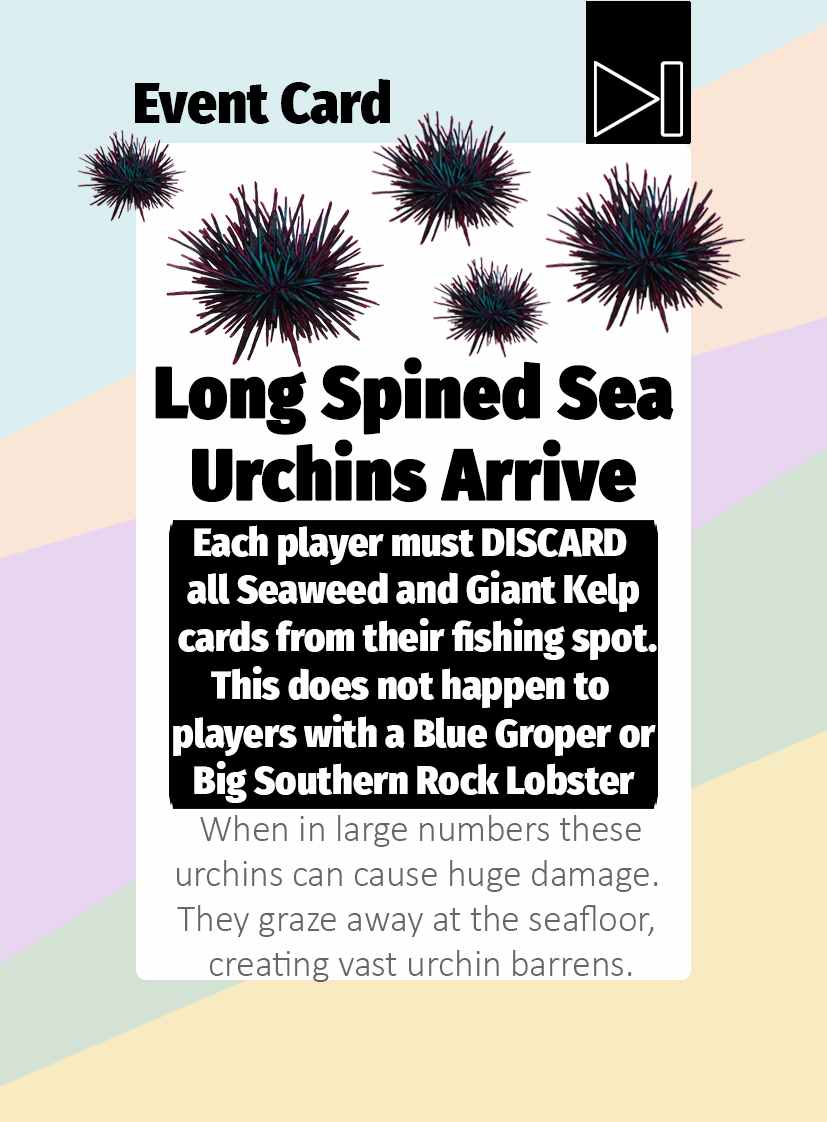
Lesson 1: Lobsters–Urchins–Kelp
A lesson about food webs, species interactions, climate change, management and restoration.
Australian science curriculum - Year 9. This lesson targets the Biological sciences focus on interdependence and interactions within ecosystems and how biological systems respond to change. “Ecosystems consist of communities of interdependent organisms… matter and energy flow…” ACSSU176
- Science Inquiry (collecting/analysing data from a model)
- Science as a Human Endeavour (evaluating management responses).
Skills: teamwork, collaboration, problem solving, critical thinking, design thinking, creativity, presentation.
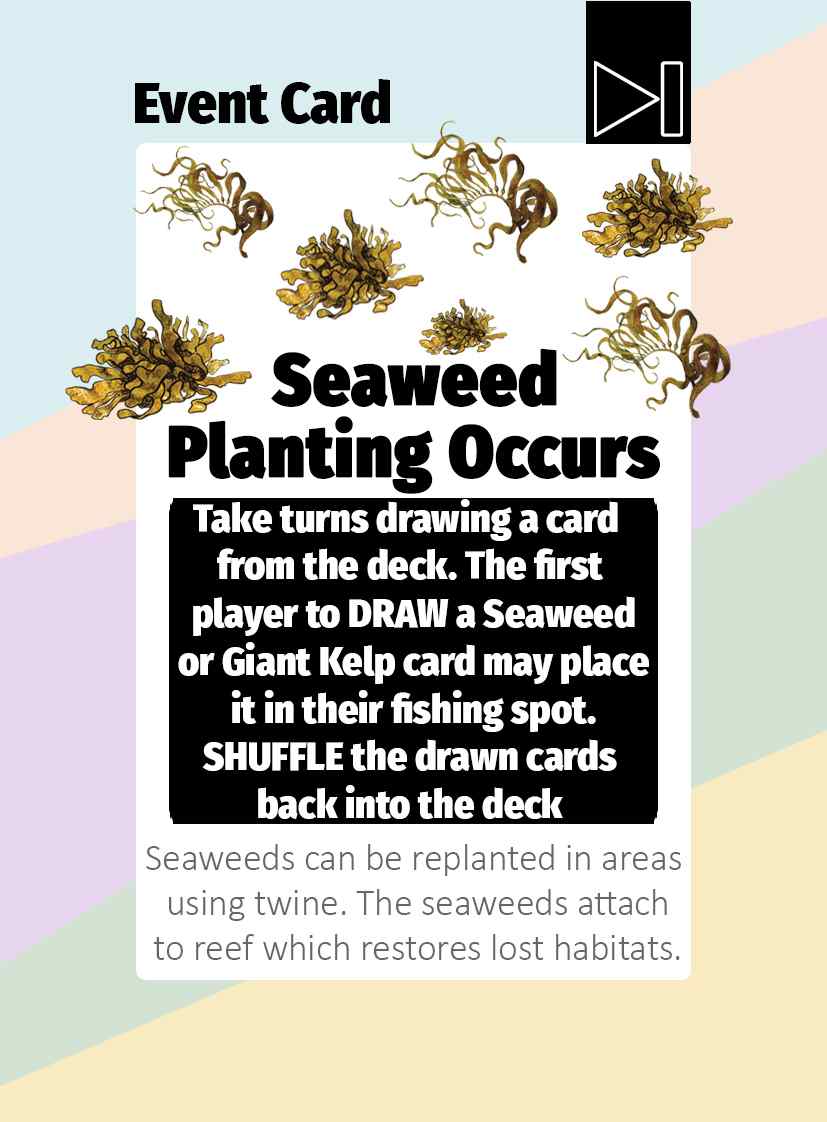
Lesson 2: Ecosystem restoration
A lesson about ecosystem degradation and methods to restore ecosystems.
Australian science curriculum - Year 9. This lesson targets the Biological sciences focus on interdependence and interactions within ecosystems and how biological systems respond to change. “Ecosystems consist of communities of interdependent organisms… matter and energy flow…” ACSSU176
- Science Inquiry (collecting/analysing data from a model)
- Science as a Human Endeavour (evaluating management responses).
The lesson also addresses the United Nations Decade on Ecosystem Restoration 2021-2030
Skills: teamwork, collaboration, problem solving, critical thinking, design thinking, creativity, writing, policy evaluation, finding correct information.
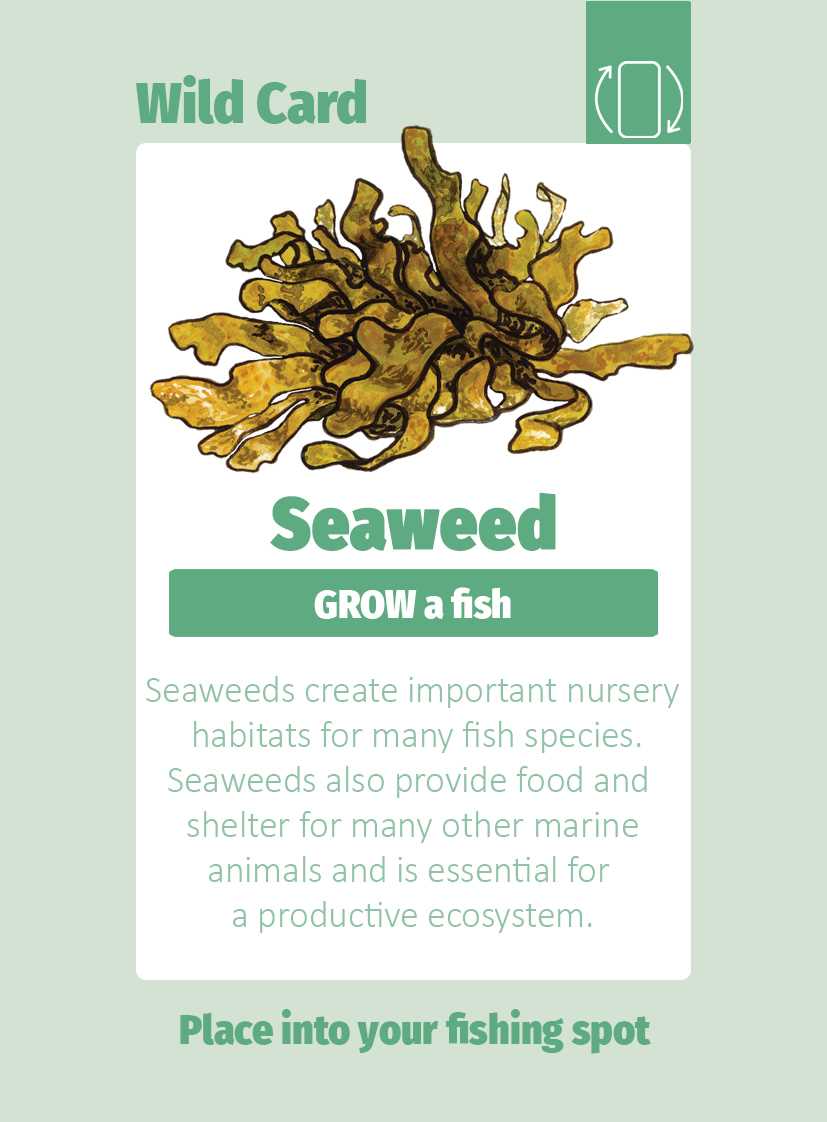
Lesson 3: Resilient ecosystems and climate change
A lesson about building marine ecosystems that can resist climate change impacts.
Australian science curriculum - Year 9. This lesson targets the Biological sciences focus on interdependence and interactions within ecosystems and how biological systems respond to change. “Ecosystems consist of communities of interdependent organisms… matter and energy flow…” ACSSU176
Science Inquiry (collecting/analysing data from a model): understanding how our environment changes with changing climactic conditions and the ways in which we can best adapt and prepare our ecosystems for these changes. AC9S9I01–AC9S9I08 (questions/hypotheses → plan → data → analyse → evaluate → argue → communicate)
Science as a Human Endeavour (evaluating management responses). AC9S9H01 (peer review / validation of knowledge) AC9S9H04 (society values/needs shaping research priorities
Skills: teamwork, collaboration, problem solving, critical thinking, design thinking, creativity, writing, summarising information accurately and concisely, planning, science communication.
Supporters and credits
The development of school lessons and school visits during the September-November 2025 were suppored by Inspiring Australia Tasmania STEM community grant.
Underwater photography provided by the game developer and science communicator Matt Testoni. Classroom photography by Phillip England.